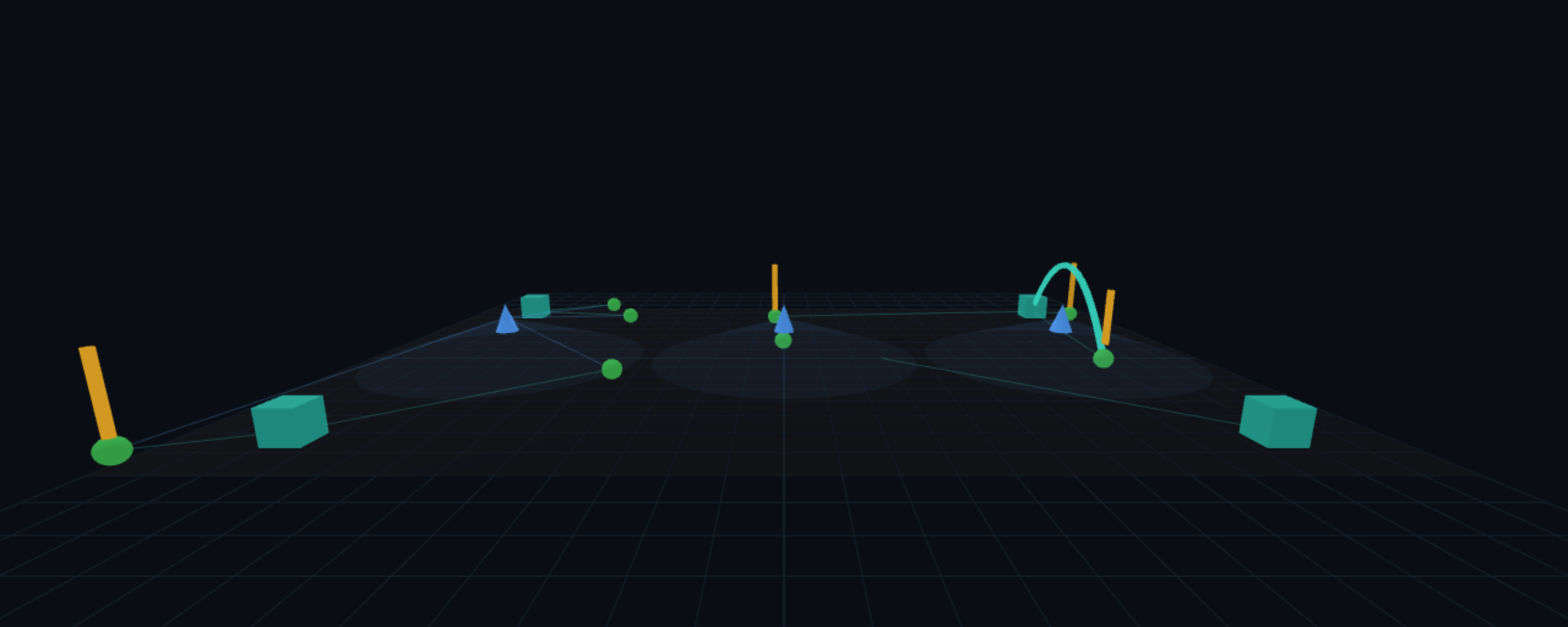
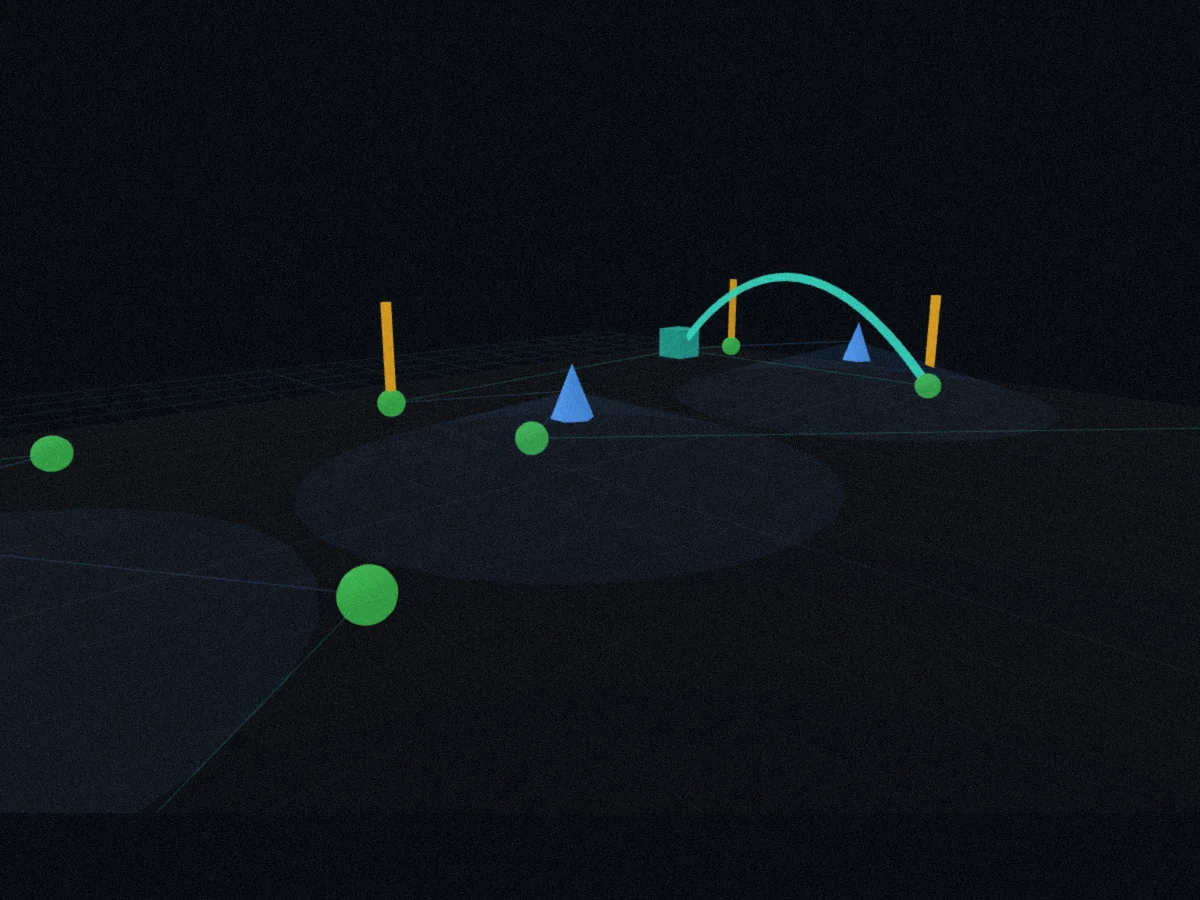
A spatial computing site rendered in 3D: radio cells overhead, edge compute nodes at the corners, headsets moving across the floor, and a control action arcing between them.
Extended reality · spatial computing

Software for extended reality that has to work in the real world

We build the systems underneath XR — real-time control, applied machine learning, and cloud platforms engineered for spatial computing over private 5G.

Predicts, doesn't react Acts inside a 10 ms loop Explains every decision
OpenXRPrivate 5G3GPPEdge computing Real-time controlInfrastructure as codeMLOpsTime-series forecasting Root-cause analysisSplit renderingMotion-to-photonExplainable AIReinforcement learning
The problem we work on

Spatial computing breaks in ways ordinary software doesn't

An XR headset has roughly 20 milliseconds to turn head movement into a photon. Miss that budget and the user doesn't see a slow app — they feel unwell. The frame is already gone by the time anything downstream notices.

That makes XR a real-time engineering problem long before it is a graphics problem: predicting network trouble instead of reacting to it, acting inside a ten-millisecond loop, and being able to explain afterwards why the system did what it did.

CognitiveXR

We'd rather show you than tell you

Our own research platform: a complete system that anticipates XR frame loss and reroutes around it before the headset is affected. We built it end to end to prove the approach works.

Motion-to-photon latency as a network fault develops Two traces from the same starting point. Without orchestration, latency climbs past the twenty-millisecond comfort budget and stays above it, dropping frames. With orchestration, the fault is predicted before it lands and its likely cause named, an action is taken, and latency bends back down and holds under the budget. time motion-to-photon latency comfort budget · 20 ms frames dropped fault predicted action taken lead time without orchestration with orchestration
How the loop behaves when a fault develops on the network.
How it works

A closed loop, not a dashboard

Telemetry comes in, models forecast what is about to happen, and the system chooses an action — while a deterministic safety layer keeps the learned component from ever having the last word.

Watch

Radio, edge and headset telemetry stream in continuously from across the site.

Predict & diagnose

Models forecast the state of the network a short interval ahead — and name which interference is behind it — before the frame that would have been lost is rendered.

Act, under a veto

Request network priority, move the render session to a healthier edge node, or hand the headset to a cleaner radio cell. A safety layer can always overrule.

Account for it

Every action decomposes into the weighted reasoning that produced it, so it can be audited rather than trusted.

What we do

What we can build for you

The problems that sit underneath extended reality: systems with a deadline, models that hold up outside a notebook, and platforms that stay affordable once they are running.

A simulated spatial-computing site rendered in 3D: headsets on a factory floor beneath radio cells, with a control action arcing to an edge node.

XR & spatial computing

Applications for standalone and tethered headsets on OpenXR — including the device telemetry and split-rendering work most teams discover late.

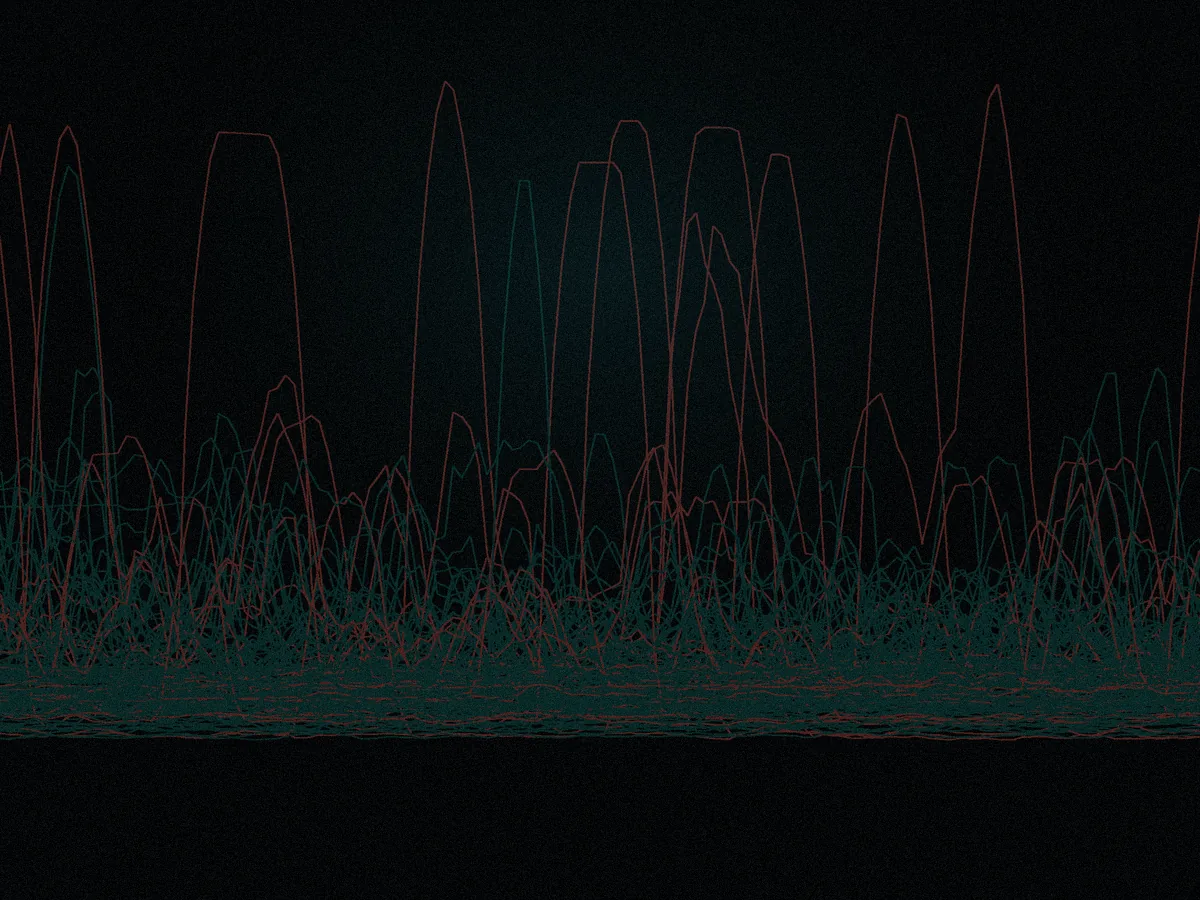
Hundreds of real motion-to-photon latency traces overlaid, with faulted runs picked out in red.

Applied ML & MLOps

Models that survive production: shared feature code so training and serving cannot drift, honest evaluation, and automated retraining.

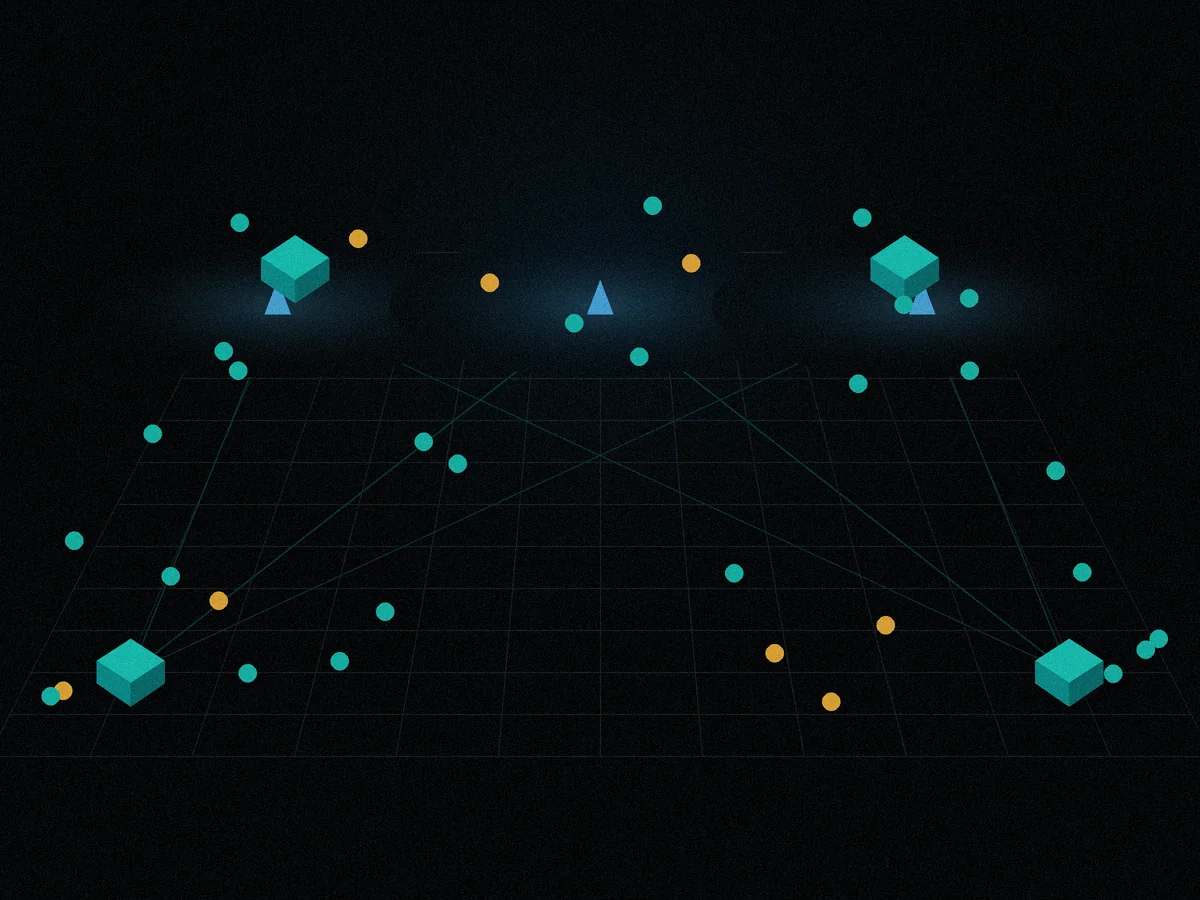
The site topology drawn as a network: edge compute nodes at the corners, radio cells overhead, and the routes between them.

Real-time & cloud platforms

Systems with a latency budget, and the infrastructure to run them — as code, with cost engineering built in from the start.

How we build

Practices we hold to, and what each prevents

One definition of a feature

Training and serving share the same code, so they cannot drift apart by construction rather than by discipline. The most expensive ML bug is the one that throws no error.

Prediction means predicting

Labels describe the future, and we measure how far ahead the warning arrives — not accuracy, which for this job is close to meaningless.

Autonomy with a veto

The learned component never has the last word. A deterministic safety layer is always on, cannot be overridden, and every decision it makes can be audited.

Cost is a design constraint

Scale-to-zero services, ephemeral training jobs, and explicit guard rails against the always-on resources that quietly accumulate cost.

Tell us what you're building

An application for a headset, a system that has to answer inside a deadline, or a model that needs to hold up in production. Rough ideas are welcome — you don't need a specification to start a conversation.

Get in touch